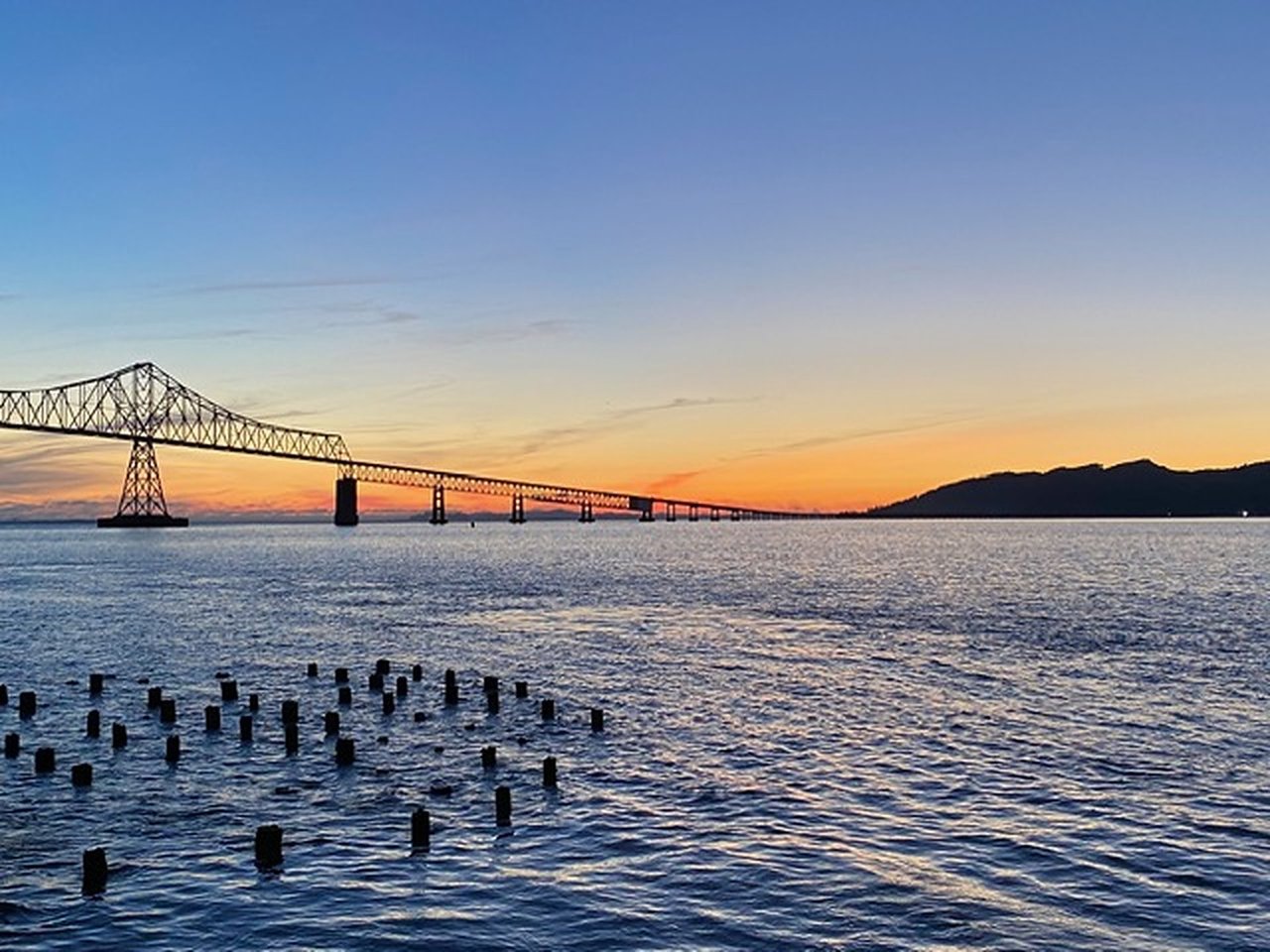
Astoria is where the Columbia River meets the Pacific, and it has been a working river town since 1811, which makes it the oldest American settlement west of the Rocky Mountains. Victorian homes climb the hillsides above a waterfront still busy with fishing boats, tugs, and cargo ships headed upriver to Portland. Add a nationally recognized maritime museum, a lively downtown of breweries and restaurants, and a four-mile bridge to Washington, and you have one of the most distinctive small cities on the West Coast.
Rise Above Realty serves Astoria and the surrounding rural areas of Knappa and Svensen from our base in Gearhart. Here is our local guide to the town, what makes it special, and what buyers and sellers should know.
Where Astoria Is
Astoria sits at the northwest corner of Oregon on the south bank of the Columbia River, about 95 miles from Portland on Highway 30 or Highway 26, and roughly a two-hour drive. The Astoria-Megler Bridge carries Highway 101 north across the river to Washington's Long Beach Peninsula. Warrenton and the beaches are a few minutes west, Gearhart and Seaside are 15 to 20 minutes south, and Cannon Beach is about half an hour.
With a population of around 10,000, Astoria is the largest city on the North Oregon Coast and the Clatsop County seat. That means the courthouse, the county offices, Columbia Memorial Hospital, Clatsop Community College, and a full range of everyday services are all in town.
The Columbia River
The river defines Astoria. It is more than four miles wide here, and everything from container ships to sea lions moves past the waterfront daily. The Astoria Riverwalk runs for miles along the water, past working canneries, piers, and parks, and the Astoria Riverfront Trolley, a restored 1913 streetcar, runs along the same route in season.
The Columbia River Bar just offshore, where the river meets the ocean, is one of the most challenging stretches of water in the world, which is why Astoria is home to the Columbia River Bar Pilots and a major U.S. Coast Guard presence. Watching the pilot boats head out in a winter storm is a local pastime.
Museums and History
Columbia River Maritime Museum. Right on the waterfront, this is one of the finest maritime museums in the country and the place to understand the river, the bar, the fishing fleet, and the Coast Guard's rescue work. The lightship Columbia is moored outside and open for tours. It is the first stop we recommend to anyone new to town.
Clatsop County Heritage Museum. Housed in the old city hall downtown and run by the Clatsop County Historical Society, the Heritage Museum tells the story of the region's Native peoples, the fur trade, the fishing and canning industries, and the immigrant communities, especially Finnish and Scandinavian families, who built Astoria.
Flavel House Museum. The 1885 Queen Anne mansion built by Captain George Flavel, Astoria's first millionaire and a legendary bar pilot, is preserved with its original woodwork and period furnishings, and it is a good look at the Victorian architecture that still fills Astoria's neighborhoods.
Astoria Column. On top of Coxcomb Hill, the 125-foot column is painted with scenes from the region's history. Climb the spiral staircase and you get a view of the river, the bridge, the ocean, and the Coast Range that explains why people fall in love with this place.
Fort Clatsop and Lewis and Clark National Historical Park. Just south of town is the replica of the fort where the Lewis and Clark expedition spent the winter of 1805 to 1806, with trails through the forest to the river.
Oregon Film Museum. In the old county jail, celebrating the movies filmed here, including The Goonies, Kindergarten Cop, and Short Circuit. Goonies fans still come from around the world to see the town.
Life in Astoria
Downtown Astoria has a real, year-round life to it: Fort George Brewery and several other breweries, the restored Liberty Theatre, independent restaurants, bookstores, galleries, and the Astoria Sunday Market from May through October. The Astoria Regatta has been held every summer since 1894, and the FisherPoets Gathering each February brings commercial fishermen from up and down the coast to read their poetry and stories.
The town is built on hills, so neighborhoods have distinct characters. The historic homes of the Uppertown and Uniontown areas and the streets above downtown offer river views and Victorian and Craftsman architecture. Alderbrook and the east end are quieter and more residential. Newer construction and larger lots are found on the outskirts and in the rural communities of Knappa and Svensen to the east along the river.
The weather is mild and wet, with cool summers, green winters, and a strong maritime climate. Astoria's schools are part of the Astoria School District, and Clatsop Community College's campus overlooks the river.
What to Know About Astoria Real Estate
- Historic homes are a big part of the market. Many Astoria houses are 80 to 130 years old. They have character you cannot build today, and they also call for careful inspections of foundations, wiring, plumbing, roofs, and moisture. A good local inspector and a broker who knows old houses are essential.
- Hillsides and slopes matter. Much of Astoria is built on steep ground. Drainage, retaining walls, and slope stability are normal parts of due diligence here, and some areas fall within mapped geologic hazard zones.
- Views drive value. A Columbia River or bridge view can add significantly to a home's price, and the difference between a partial view and a full view is real.
- Zoning and the city code. What you can build, add, or operate on a property depends on its zone. The City of Astoria's Community Development and Planning page and the Astoria City Code are the current sources, and the city's online GIS maps let you look up a specific parcel's zoning.
- Short-term rentals are regulated. Astoria allows short-term rentals under its homestay lodging rules, which require a permit and set specific conditions. These rules change from time to time, so check the City of Astoria homestay lodging page for the current requirements before you count on rental income.
- There is a year-round economy. Unlike some coastal towns, Astoria has a working port, a hospital, a college, government offices, and a growing creative and hospitality sector. That supports a steadier full-time housing market alongside second homes.
- Rural options nearby. If you want acreage, a shop, or room for animals, Knappa and Svensen along Highway 30 east of town offer rural living within a short drive of Astoria's services.
How Rise Above Realty Can Help
Our brokers live and work on the North Coast and know Astoria's neighborhoods, its old houses, its hillsides, and its rules. Whether you are looking for a Victorian with a river view, a first home near downtown, or a rural property out toward Knappa, we will guide you through it with care.
Explore current Astoria listings, request a free home valuation, or contact us to talk with a broker who knows the river town well.


